gr7

gr7

Monday, 12 November 2012

nov 12 science & math


Science: Unit 1 Review

The 3 states of matter are solids, liquids, and gases.  Matter is anything that has mass and takes up space.

Chemistry can often imitate or copy matter found in nature using artificial  chemicals producing man-made flavors, scents and even colors.

All matter is made up of tiny, microscopic particles.  They have empty spaces between them and are moving randomly all the time.  They move faster  and spread father apart when they are heated.  They are also attracted to each other and stay together instead of flying apart.

A solid has a definite shape and a definite volume.

A liquid has a definite volume and takes the shape of its container.

A gas does not have a definite volume or shape; it expands to fill the shape and volume of its container.

As liquid water is heated, the water particles move farther apart causing the water to change to water vapour or steam.

A pure substance is made up of only 1 type of substance.  3 examples include salt, sugar, baking soda.

A mixture is matter that is made up of 2 or more pure substances.  3 examples include milk, water, fat.

2 examples of hazardous or dangerous pure substances that should never be discarded into regular garbage include mercury, uranium.

A mechanical or heterogenous mixture is one where you can see the different parts of the mixture because the particles weren’t evenly mixed such as garden soils or omelettes.

A solution or homogenous mixture is one that looks like 1 pure substance but is really made up of different particles that were evenly mixed such as shampoo or   stainless steel.


terry fox, poppy & civies day $ due wednesday

Thursday, 8 November 2012

nov 8 - 3 Links for at-home math help, 4.3 corrections & hmrk

1.  Use Kahn Academy as we did today for at-home math help: http://www.khanacademy.org/math/algebra/solving-linear-equations-and-inequalities/v/patterns-in-sequences-1

2. Online math tutoring is also available Sundays to Thursdays at 5:30pm-9:30pm at http://www.ontario.ca/homeworkhelp

3.  If you like using manipulatives to better understand math concepts check out http://nlvm.usu.edu/en/nav/vlibrary.html

Use them, they are available to you with a click of a mouse!


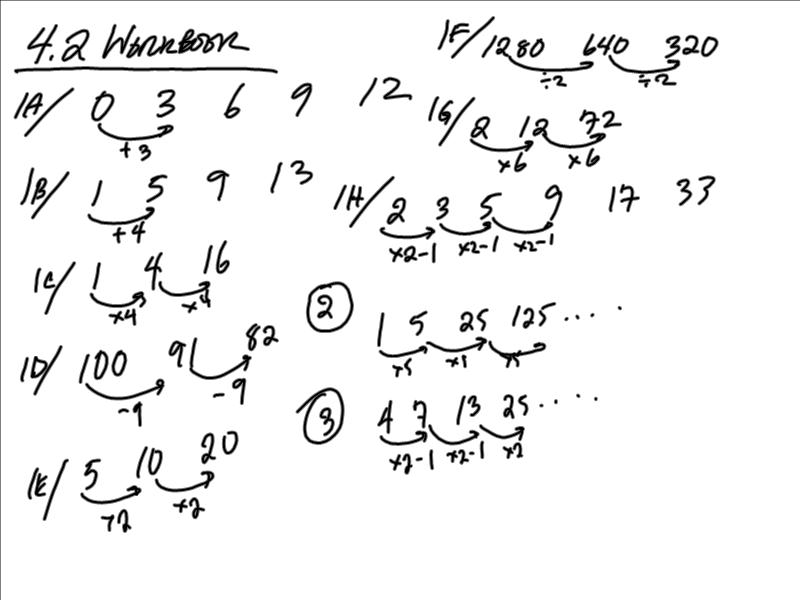
4.3 corrections below:


Homework:
First, practice what we did today by doing a few questions from 4.3 workbook. 
Next, complete mid-chapter review to see if you've understand what we've covered so far in this patterning unit.

Reminder:
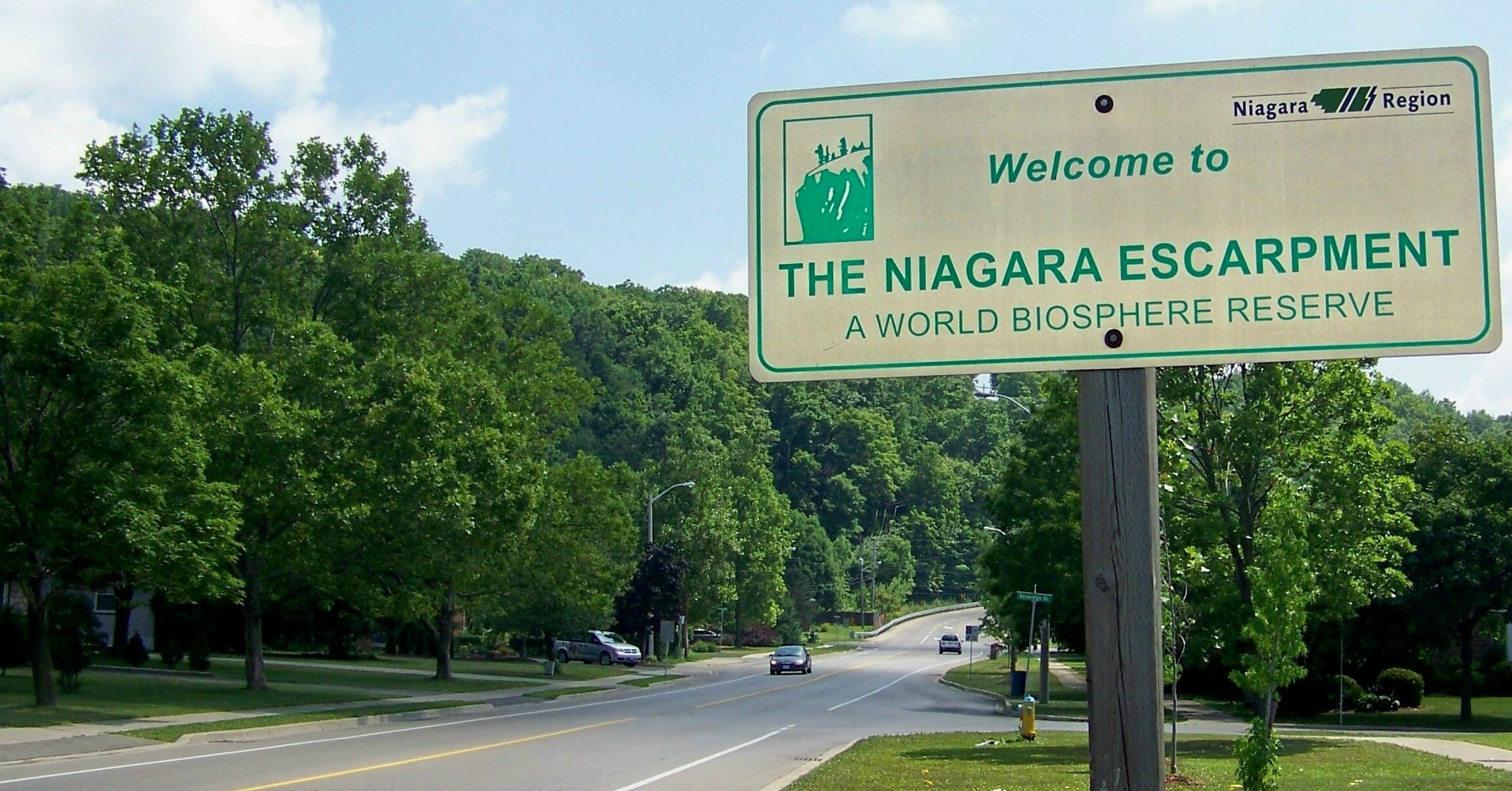
Tomorrow last day to submit Niagara Escarpment geography task which was assigned last Friday and last day to submit Mini Science Lab 3: Mixtures & Solutions assigned this past Tuesday.

Tuesday, 6 November 2012

nov 6 reminders

  • geography task & science mini lab due both this week, no later than Friday

nov 6 science


Science 1.4 Pure Substances & Mixtures

2.  The carton of orange juice is not a pure substance because the juice is made up of naturally occurring water, sugars, vitamins, minerals, and artificial fragrances and flavors that replicate the scent and taste of a freshly cut and squeezed orange.  Read article http://www.healthzone.ca/health/dietfitness/article/636563--what-s-wrong-with-orange-juice


3. Hazardous waste such as paints, motor lubricants, household cleaners/chemicals and especially electronic waste (batteries, computers, tvs which contain high levels of mercury & cadmium) have to be recycled separately since they can easily contaminate our land, water and air (especially if the internal parts are heat to extract i.e. gold from circuit board as done in Asian countries where 70% of world's e-waste ends up) with toxins.


Pure substances: aluminum foil, table salt, distilled water, sugar, baking soda, 24K gold – are elements listed on a periodic table


Mixtures: coffee, milk, batter, juice, cement, gasoline, soaps, 14k/18k gold has other metals in it


Cookies: mixture

Sugar: pure substance from the sugar cane

Aluminum foil: pure substance metal

Steel: pure substance metal

Apple Juice: mixture (natural/artificial water, sugars, flavor)

Water: not 100% pure since it contains naturally occurring minerals, salts, polluting chemicals.

Lead: pure substance metal

Sweetened water: mixture

Air: pure substance – can mix with other pollutants

Mercury: pure substance


Complete handout 1.6 Check your understanding

Mechanical Mixtures - the particles of matter have not been mixed evenly; you can see all the different kinds of matter i.e. garden soils, omelette.

Solutions such as shampoo have water, fragrance, color, detergent and vitamin/protein particles evenly mixed so it looks like 1 kind of matter.

Mini Lab Text pg.27

Purpose:  To create a mixture and observe its properties.

Observations:

Procedure
Observations
1.       Oil stirred in water
 
2.       Stir food coloring in oil/water mixture
 
3.       Stir detergent in food coloring/oil/water mixture
 
Analysis:
Answer A, B, C.

Conclusion:
Explain what you learned about particles in mixtures.


nov 6 u3 final test corrections


Monday, 5 November 2012

nov 5

  • complete geography task about Niagara Escarpment
  • complete science handout about pure substances & mixtures

Friday, 2 November 2012

nov 2 geography


Ontario's Niagara Escarpment is a forested ridge and protected biosphere that extends from Tobermory in the north to Queenston in the south.  See map 2.24 on pg.37 of your text.  On a map, you are to identify 5 major cities or townships in between Tobermory and Queenston that are part of this natural reserve; identify 3 different species that inhabit the escarpment; identify 3 different land formations that make up the escarpment; identify 3 different types of vegetation that can be found here. You may work with 1 partner on this task. Copy/paste your map into either PowerPoint or Word, your choice.

Thursday, 1 November 2012

nov 1 reminders

  • literacy questions due tomorrow
  • math unit 3 test tomorrow
  • if you have pastels, bring them tomorrow for art

Wednesday, 31 October 2012