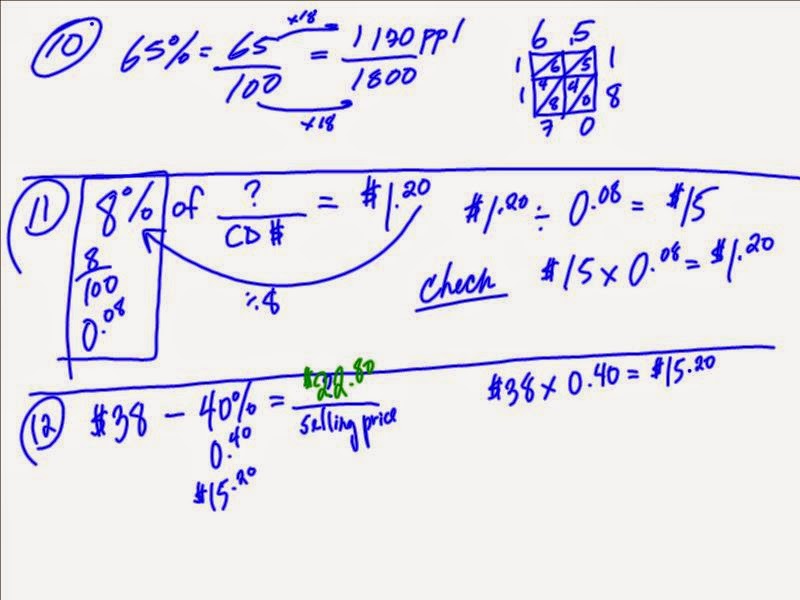
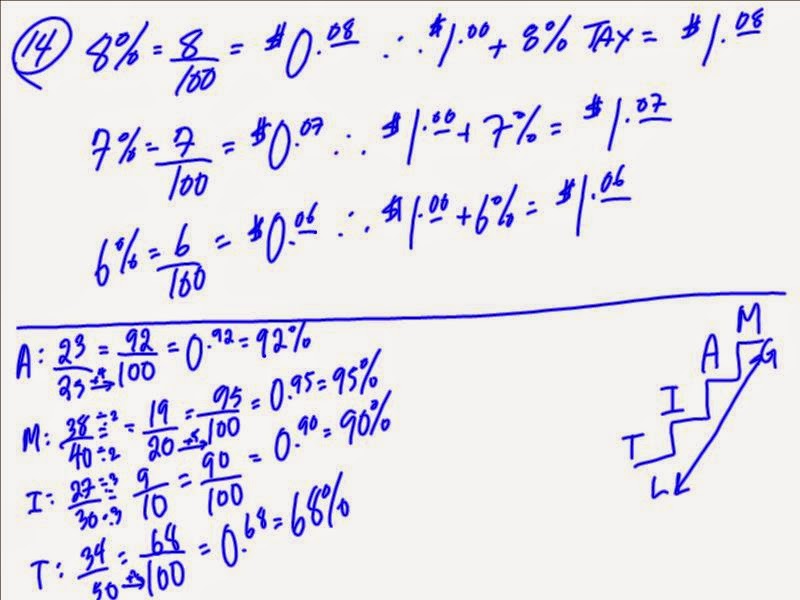
gr7

gr7

Tuesday, 14 October 2014

Oct.14

Language/Health: Reading Response

In the health article Sugar Overload we learned some key ideas, namely:

  • ·       sugar is sugar: refined white, honey, maple syrup, agave nectar, high-fructose corn syrup, organic cane sugar, etc.;
  • ·       sugar is unavoidable, it has been added to nearly everything we consume;
  • ·       sugar is not only causing obesity but is linked to heart disease, diabetes and Alzheimer’s;
  • ·       a 9-year-old Canadian boy will consume 123lb of sugar/year; Canadian male teens consume 138lb/year;
  • ·       we are addicted to sugar, we are programmed to crave it and food companies know this and profit from it;
  • ·       food companies have determined the perfect amount of sugar, salt and fat in our foods that will satisfy our craving and will leave us wanting more;
  • ·       using junk food in fundraising, to reward, calm and entertain kids is normal

 Guiding questions for your reading response:
  1. Did you learn something new that you were unaware of before?
  2. Did any idea(s) surprise you?  Why?
  3. Will this have any effect on what you eat?  How?
  4. What would you say to a large food company like Kraft or Nestle?
we are working on this task throughout the week.

Geography: The Niagara Escarpment 
Some key ideas to consider developing into either a promotional handout, poster, Publisher brochure, Prezi, Emaze, PowerPoint or MovieMaker video about the Niagara Escarpment

·                     Ridge of sedimentary rock extending 700+ kms from Tobermory, Ontario to Niagara Falls
·                     Extends through Ontario regions of Bruce, Grey, Simcoe, Dufferin, Peel, Halton, Hamilton, Niagara
·                     Biosphere Reserve (conservation area composed of unique flora & fauna that are protected from urbanization/development)
·                     Tourist/recreational area for hikers, campers, rock-climbers, zip-liners, cottagers and anyone who wants to enjoy the outdoors/natural wonders
·                     Landforms consisting of forest, grasslands, wetlands, rolling hills, waterfalls
·                     Major waterfalls: Niagara, Albion, Devil's Punchbowl, Webster's
·                     Fauna: eagles, hawks, salamanders, rattlesnakes, squirrel bat
·                     Flora: sugar maple, ferns, orchids

we are working on this task throughout the week.


final test tomorrow


Friday, 10 October 2014

Oct.10

Geography: The Niagara Escarpment pg.37

On the way to Belfountain (region of Caledon, Ontario)

Mount Nemo, Burlington (region of Halton, Ontario)


Some key ideas to consider developing into either a promotional handout, poster, Publisher brochure, Prezi, Emaze, PowerPoint or MovieMaker video.

  • Ridge of sedimentary rock extending 700+ kms from Tobermory, Ontario to Niagara Falls
  • Extends through Ontario regions of Bruce, Grey, Simcoe, Dufferin, Peel, Halton, Hamilton, Niagara
  • Biosphere Reserve (conservation area composed of unique flora & fauna that are protected from urbanization/development)
  • Tourist/recreational area for hikers, campers, rock-climbers, zip-liners, cottagers and anyone who wants to enjoy the outdoors/natural wonders
  • Landforms consisting of forest, grasslands, wetlands, rolling hills, waterfalls
  • Major waterfalls: Niagara, Albion, Devil's Punchbowl, Webster's
  • Fauna: eagles, hawks, salamanders, rattlesnakes, squirrel bat
  • Flora: sugar maple, ferns, orchids

Wednesday, 8 October 2014

Oct.7

To further support your health task, continue reading Maclean's article Sugar Overload and view my Prezi http://prezi.com/ldie7edilass/?utm_campaign=share&utm_medium=copy&rc=ex0share

Students, as discussed, you have the choice as to how your team would like to document your added sugar intake - it can be as simple as a hardcopy (1 product with corresponding math rates per sheet) with a final written reflection; a multi-media presentation is not mandatory.


Tuesday, 7 October 2014

Oct.7

Tasks we are working on this week and submitting by end of day this Friday:

Language (max 3/grp)
Hatchet: plot structure (exposition, rising action, climax, resolution, theme) presented either as a hardcopy, prezi.com or emaze.com - your choice.

Math 
Fuel economy of your personal family car on a roadtrip (cost & # of gas tanks)

Science (max 3/grp)
Lab #3 pure substances vs mixtures

Health/Science/Math
Sugar intake rates (max 4/grp)

Art 
Perspective Autumn


Monday, 6 October 2014

Oct.6

Health/Science/Math Rates Team Task


French:

Circle the verbs on pg.18 La Voix Des Ados and write down l'infinitif.


Novel Study: Hatchet Chp.19-20 Plot Diagram Climax (high point):

The survival pack yields a "treasure of presents" for Brian including: a sleeping bag, cooking kit, fishing kit, camp fire kit, rifle, first aid kit, toiletries, compass, transmitter and dehydrated food - all essential supplies he needed 2 months ago; it's ironic that he finds the survival pack now after having to create these supplies from scratch.

Brian is surprised by a plane/pilot (bush trapper) that spontaneously appears to rescue him - he does not know how to react and simply introduces himself and offers the pilot food. 

Epilogue Plot Diagram (Falling Action/Resolution):

This chapter catalogs the changes in Brian resulting from his ordeal:

-he lost a lot of weight/body fat
-he became more observant and reacted better (acute senses)
-he became more thoughtful before speaking
-he no longer took food for granted; he was in awe of it
-his adventure was documented by reporters
-the plants and animals he encountered were identified
-father back to work in oil fields, mom back to work in real estate
-Brian never revealed The Secret to his dad
-This "Brian" is not the "original Brian": his experience changed him physically, mentally and emotionally.

Friday, 3 October 2014

Oct.3

My Task Tracker

As of today, the following tasks should be completed, submitted and checked off on your task tracker (unless you have negotiated an extension):


Science/Health/Math:

Bring to class 1 nutritional facts label (or a picture of it) from any food product you enjoy eating on a regular basis so we can calculate our daily, weekly, monthly sugar consumption of those products.  We will use our knowledge of math rates 1 teaspoon sugar = 4 grams of sugar and compare it against the recommended daily intake limit (women 6 tsp/day, men 9 tsp/day).

http://www.cbc.ca/fifth/episodes/2012-2013/the-secrets-of-sugar


Pure Substances & Mixtures


Examples of pure substances that contain only 1 kind of particle include:
-distilled water
-copper
-tin, aluminum foil
-pure sugar (sucrose)
-diamond
-table salt (sodium chloride)
-baking soda (sodium bicarbonate)
-pure olive oil
-pure maple syrup
-pure unpastuerized honey
-sulfur 
-cocoa, coffee

Examples of mixtures that contain 2 or more pure substances include:
-gasoline (engine cleaning detergents)
-smog
-dairy products
-wine (grape blends)
-alloy (combination of different metals)
-juices blends
-blended/refined cooking oils
-water: hydrogen & oxygen
-carbonated water: spring water w/carbon dioxide
-air: nitrogen & oxygen (emissions, pollution etc)
-minerals


Batteries, paints, wood stains, drain cleaner, car antifreeze, pesticides, fertilizers, motor oil, bleach, cannot be disposed in the regular garbage because they contain a combination of toxic pure substances.  Our city conducts a separate collection of "hazardous waste" products.


Pure substances are completely natural containing only 1 specific particle, whereas, mixtures are a combination of 2+ of those pure substances.

cookies: mixture
sugar: pure
aluminum foil: pure
steel: mixture of iron & carbon
apple juice: mixture (water, sugar, pasteurization)
tap water: mixture (contaminants, bacteria, flouride, chorline, minerals etc.)
lead: pure element on periodic table
air: mixture
mercury: pure
sweetened water: mixture

Orange Juice is a mixture, not a pure substance because chemists have added artificial fragrances and flavours to mimic the smell and taste of freshly squeezed natural juice.  They have balanced acidity and sugar levels.  They have now also added calcium and vitamins to it.  Read Toronto Star article by clicking link: 
http://www.thestar.com/life/health_wellness/nutrition/2009/05/20/whats_wrong_with_orange_juice.html


Lab 3 Pure Substances vs Mixtures

Purpose:  
To test ink in a black marker to determine if it's a pure substance.

Hypothesis:  
If I use a black marker to draw a line on a strip of filter paper and let it stand in a glass of water just up to the drawn line for a few minutes, then I think...because...

Procedure:
Text pg.21 1-4

Observations:
Question A answered using:  table, pictures, or video.

Analysis:
Question B.

You will conduct this experiment with a partner on Monday.


Novel Study: Hatchet Chp.17-18 Rising Action approaching Climax

Using his "sense" and "patience", Brian problem-solves his way to the sunken plane (by creating a raft and using it as a base) to recover the survival pack stowed in the fuselage.


Brian nearly looses his hatchet which represents him - his hope and determination to survive; without it, he is nothing.  Brian is sickened by the pilot's decomposed skull but is successful in recovering the survival pack.


Wednesday, 1 October 2014

Oct.1

Math Problem of the Week:

Submit your team's solution tomorrow, if you didn't today.


Language:

Hatchet creative writing.  Follow success checklist posted yesterday.  Submit this Friday.


Geography:

Your special place.  Follow example posted Monday.  Submit this Friday.


Me to We:

Bring in non-perishable food items for our Thanksgiving Food Drive.  Anything helps and will be appreciated :)


Tuesday, 30 September 2014

Sept.30

Novel Study: Hatchet Chp.15 Plot Diagram rising action

Brian is learning to survive through a process of much trial and error; taking time and strategizing, thinking before he acts. 

He comes to realize a very important lesson: "so much of all living was patience and thinking".  You have to work towards a goal and plan, plan and plan.

Brian's senses are becoming increasingly more acute (in touch with nature) and it's helping him hunt for food - his greatest challenge was hunting the "foolbirds" for his First Meat.  Any accomplishment involves planning, patience, hard work and self-motivation.


Hatchet Creative Writing Checklist: (final copy due Thursday)

- is the writer's voice (his/her personal feelings, opinions) clearly evident in the  piece?

- are the writer's 3 must-haves clearly identified with supporting reasons for each?

- is the writer's preference of stranded location & season clearly identified with supporting reasons

- does the writer clearly explain how he/she would react in that situation with supporting reasons?

- are the writer's ideas easy to read and follow because of proper sentence structure, punctuation and spelling?


Science: Pure Substances & Mixtures
Read & complete.  Corrections tomorrow.


Monday, 29 September 2014

Sept.29


For example:


My family enjoys visiting Etienne Brule park.  It is located just behind the Old Mill in the Kingsway community of Etobicoke, Toronto.  

The park is situated approximately in the  north west corner of Jane and Bloor, south of Dundas, east of Prince Edward.  The Humber River flows through it.  Pictured below is a mental map of its location:


This park is a destination for dog walkers, bird and fish photographers, recreational fishing, children, baseball leagues, and anyone who enjoys being among nature.

My wife, Linda, is particularly fond of this park since she recalls her dad photographing her as a child on the playscape and taking her on nature hikes when they lived in the area.  We enjoy interacting with other dog walkers, watching our dogs play together or just sittting by the Humber River listening to the flowing waterfalls as we slow down to enjoy some quiet family time in the heart of our busy city.  Our children love collecting acorns, chasing the squirrels and playing on the monkey bars.   


Novel Study: Hatchet Chp.13-14 Plot Diagram rising action

After missing the attention of the passing rescue plane, Brian becomes deeply depressed and attempts suicide but does not go through with it.  Out of this despair, comes a "new Brian" with a renewed self-confidence to survive whether he is rescued or not.

Brian has an encounter with a skunk and it affects him for over 1 month.  He realizes that for him and for all animals, food is first.  Brian reinforces his shelter to make it safer and creates a food storage shelf.  He learns to attract fish to a newly enclosed pond which will serve as a primary food source.