gr7

gr7

Wednesday, 30 May 2012

Ancient Civilizations Reading: Carter, Christian, Leo


ANCIENT ROMAN CIVILIZATION

Carter, Christian, Leo


LEGENDS

The ancient Romans loved to hear the story of Romulus and Remus. In their eyes, this story explained why Rome had the right to rule.

According to the legend, Romulus and Remus justified their right to rule because their mother was a princess and their father was the war god Mars.

The legend of Romulus and Remus

Rhea was married to Mars, the Roman god of war. Rhea had twin sons. She loved her boys, but there were plots afoot by other gods and goddesses to harm her father, herself, her husband, and her children. To protect the boys, she set them adrift on the river, hoping someone would find them. Who would not love such beautiful boys?

Sure enough, first they were found by a she-wolf who fed them. Then a shepherd and his wife adopted the boys.

As the twins grew older, they decided they did not want to take care of sheep. They wanted to be kings. They decided to build a city on the shores of the Tiber. They both wanted to be the only king. They quarreled. In a fit of rage, Romulus picked up a rock, killed his brother, and made himself king.

That’s how Rome started.


DAILY LIFE

We know quite a bit about Roman government, which was famous for power and law, and a great deal about Roman religion with its many Roman gods and festivals.  

Rome grew from an important city into a huge, crowded, noisy, smoky, dusty city, with beautiful temples and public buildings. The rich had gracious homes, each with an entrance atrium, which was the center of family life.  For those who were not quite as rich, there were apartment buildings, some quite nice ones, and there were shabby tenements for the poor. Narrow streets wound between the seven hills.

Some people walked around Rome. Some were carried in covered litters, with curtained couches carried on poles by slaves. Soldiers strode though town in chain mail or leather armor. Workmen hurried in belted tunics of dark wool. Before daylight, boys hurried to school. Later in the day, Roman citizens strolled around town in white wool tunics. Shops lined the streets. 

Down in the Forum, courts were in session, and the great Senate orators met and argued.

Even for the poor, life in the city was lively. There was always something going on, like the many religious festivals with entertainment paid for by the rich, and chariot racing with an open track that ran between the seven hills. These were free spectacles that all the people could enjoy.


GOVERNMENT

Julius Caesar was a great general and an important leader in ancient Rome.

During his lifetime, he had held just about every important title in the Roman Republic including consul, tribune of the people, high commander of the army, and high priest. 

He suggested new laws, most of which were approved by the Senate. 

He reorganized the army. 

He improved the way the provinces were governed. 

The Romans even named a month after him, the month of July for Julius Caesar.

When Julius Caesar said he had something to say, the people flocked to the Forum to hear his ideas. His ideas had been good ones. The people trusted him. Julius Caesar told the people that he could solve Rome's problems.

After the people of Rome had chased away the last of the Etruscan kings, the people declared Rome to be a republic. What is a republic? A republic is a government run by elected officials. 

The new government of the Roman Republic ordered the letters SPQR to be chiseled on   public buildings, armor, coins, and even park benches. The letters SPQR were chiseled on anything that belonged to the state. 

Under the Republic, the state was composed of the Senate and the People of Rome. That's what SPQR stood for - ‘Senatus Populus Que Romanus’ - the Senate and the People of Rome. 

It was a publicity campaign, and it worked!  Every time the people saw the letters SPQR, they were reassured that things had changed. The kings were gone. It was a time of new leadership and new government. It was the time of the Roman Republic. 


CULTURE & ARCHITECTURE

The ancient Romans loved chariot racing. In early Roman times, young nobles used to race their chariots around the 7 hills of Rome. People had to scatter to get out of the way. They stopped for no one.

In the 6c BCE (about 2,500 years ago!), the ancient Romans built the Circus Maximus in the city of Rome. Basically, the Maximus was a race track. It was designed to race chariots. Women could attend the races. They could sit with men. That was very unusual. 

The original Circus Maximus was built out of wood. It burnt down a couple of times. During the Roman Empire, the Circus Maximus was rebuilt using marble and concrete (an ancient Roman invention!). 

The Circus Maximus was not the only circus in the Roman Empire. The Romans built circuses (outdoor racetracks) all over the Empire. The Circus Maximus was the most well known race track. 

It could seat over 250,000 people! Admission was free. Anyone could attend the races, including Rome's poor. There were races every day. It was the height of success to race in the Circus Maximus.


The Colosseum was a huge public entertainment center.

The Colosseum could seat 45,000 spectators. Some people were not lucky enough to have a seat in the Colosseum. If you didn't mind standing, the Colosseum could hold up to 70,000 spectators!

This is where the ancient Romans gathered to watch bloody combat between gladiators, and battles between men and wild animals. This is where they threw people to the lions! To see men being killed was very entertaining to the ancient Romans. On occasion, they flooded the Colosseum with water, to hold naval battles. During the battles, many competitors died.

The ancient Romans were great builders. They built things to last. The Colosseum was built of concrete, faced with stone, as were most amphitheaters. It was built in the early days of the Roman Empire, around 70 CE. It was designed to host huge spectacles.  Anyone could attend the events in the Colosseum. Admission was free.  

There is an old expression, "All roads lead to Rome." In ancient Rome, Rome was the heart of the empire. Each time a new city was conquered, a road was built from that city back to Rome.
Roads were built in straight lines. Many had gutters. Along the side of road, the Romans built road signs called milestones. Milestones did not give any information about other towns in the area. Milestones told how far it was back to Rome.

Ancient Civilizations Reading: Alona, Beatriz, Melissa


ANCIENT GREEK CIVILIZATION

Alona, Beatriz, Melissa

GEOGRAPHY

Greece is a peninsula, which means that it is surrounded on three sides by water. Greece has a lot of smaller peninsulas sticking out from it, which means Greece enjoys many natural harbors.

Greece is also covered with mountains. They are not huge mountains but if you are trying to go from place to place in Greece, you'll find the mountains a bit of a hindrance.

Three thousand years ago, it was very difficult to get from place to place in ancient Greece by walking. But it was easy to get from place to place in Greece by boat.

In the ancient world that grew up around the Mediterranean Sea, the Greeks became known as great sailors. They sailed about the Mediterranean, setting up colonies and outposts where they could.

Athenians thought of themselves as the shining star of the Greek city-states. They were famed for their literature, poetry, drama, theatre, schools, buildings, and government.

Before the Greek dark ages, Athens was a small village, home to a tribe of Ionian people. After the Greek dark ages, Athens grew rapidly until Athens was one of the two most powerful city-states in the ancient Greek world. (The other was Sparta.)

The Athenian were very different from the ancient Spartans.

  • The Spartans were famed for their military strength.
  • Athenians were famed for their commitment to the arts and sciences.

GOVERNMENT

Over 2400 years ago, the famous Greek general, Pericles, said, "It is true that we (Athenians) are called a democracy, for the administration is in the hands of the many and not the few, with equal justice to all alike in their private disputes."

Only in Athens, and only for a short time, "rule by many" meant that all citizens had to be willing to take an active part in government. That was the law.

Each year, 500 names were drawn from all the citizens of Athens. Those 500 citizens had to serve for one year as the law makers of ancient Athens.

All citizens of Athens were required to vote on any new law that this body of 500 citizens created. One man, one vote, majority ruled. Women, children, and slaves were not citizens, and thus could not vote.

OLYMPICS

The first Olympics games are usually given the start year of 776 BCE, but they probably began even sooner.

The ancient Greeks loved competitions of all sorts, especially sporting competitions. The Olympics were not the only competition games held in ancient Greece, but they were the most popular.

The following is a humorous look at five ancient Greek city-states. In truth, the Greeks took the games quite seriously. Nearly all the ancient Greek cities sent teams to participate in the ancient Greek Olympics.

If two or more Greek city-states happen to be at war with each other when the game date arrived, war was halted for the duration of the games.

Everyone wanted their city-state to win!

ART & ARCHITECTURE

The ancient Greeks loved beauty, music, literature, drama, philosophy, politics and art.

There was an ongoing competition between city-states as to which city-state had the best statues and the most beautiful temples. Wars were not started over who had the best art, but many a fist fight probably occurred.

The ancient Greeks made statues of perfect people. (Some of the ancient Roman statues, for example, had big noses. The Greeks would never do that.)

The ancient Greeks invented three types of columns that were used all over ancient Greece. The columns were placed to support a building, but also adjusted in size and angle and in footage from each other, so that from a distance, the columns looked perfectly symmetrical.

Their designs on vases of all sorts, for all purposes, reveals their love of the geometric and visually interesting.

"The term acropolis means upper city and many of the city states of ancient Greece are built around an acropolis where the inhabitants can go as a place of refuge in times of invasion. It's for this reason that the most sacred buildings are usually on the acropolis. It's the safest most secure place in town."

The Acropolis in Athens is perhaps the most famous. In Athens, as in other Greek city-states, the ancient Athenians built temples and moments on the Acropolis dedicated to Athena and other ancient Greek gods.

The Parthenon was built by Pericles in the 5th century BCE.

LEGENDS & MYTHS

Once upon a time, a long time ago, there was an ancient city named Troy. Troy was located on the coast of Asia, across the sea from the Greek city-state of Sparta.

In those days, people used to build walls around their city to help protect them. Some walls were only a few feet high. Others as much as twenty feet high!

The people built gates in the wall. The gates could be opened to let people inside the city. In times of war, the gates could be closed and locked to stop intruders from getting inside.

Once up a time, a long time ago, Zeus ordered Hephaestus (Aphrodite's husband) to make him a daughter. It was the first woman made out of clay. Hephaestus made a beautiful woman and named her Pandora.

Zeus sent his new daughter, Pandora, down to earth so that she could marry Epimetheus, who was a gentle but lonely man.

Zeus was not being kind. He was getting even. Epimetheus and Prometheus were brothers. Zeus was mad at one of the brothers, Prometheus, for giving people fire without asking Zeus first.

Zeus gave Pandora a little box with a big heavy lock on it. He made her promise never to open the box. He gave the key to Pandora’s husband and told him to never open the box. Zeus was sure that Epimetheus' curiosity would get the better of him, and that either Epimetheus or his brother would open the box.

Pandora was very curious. She wanted to see what was inside the box, but Epimetheus said no. Better not. "You know your father," Epimetheus sighed, referring to Zeus. "He’s a tricky one."

One day, when Epimetheus lay sleeping, Pandora stole the key and opened the box.

Out flew every kind of disease and sickness, hate and envy, and all the bad things that people had never experienced before. Pandora slammed the lid closed, but it was too late. All the bad things were already out of the box. They flew away, out into the world.

Epimetheus woke up at the sound of her sobbing. “I opened the box and all these ugly things flew out,” she cried. “I tried to catch them, but they all got out.” Pandora opened the box to show him how empty it was. But the box was not quite empty. One tiny bug flew quickly out before Pandora could slam the lid shut again.

“Hello, Pandora,” said the bug, hovering just out of reach. “My name is Hope.” With a nod of thanks for being set free, Hope flew out into the world, a world that now held Envy, Crime, Hate, and Disease – and Hope.

GREAT THINKERS

Aristotle was born in ancient Macedonia. He was a philosopher who lived over 2000 years ago. He spent much of his time in ancient Greece. Aristotle admired the Greeks and the Greek way of life.

He had a huge influence on the prince of Macedonia, Alexander the Great. Aristotle was one of Alexander's teachers. Aristotle taught Alexander to also love the Greek way of life.

Aristotle is famous for his many sayings, many of which are still quoted today. Here are just a few of them.

  • "We are what we repeatedly do. Excellence then is a habit."
  • "We must reduce everything to the simplest form possible, but no simpler."
  • "We think in pictures. If you wish to change what you think, change the picture."

Socrates was a famous teacher in ancient Athens. He wanted his students to question things. "Is our government good? If gods exist, where do they live?"

This angered some of the wealthy nobles in ancient Athens, not many, but a few. They accused Socrates of mocking the gods. They demanded a trial. If found guilty, anyone who mocked the gods would be killed. This was a severe charge. 

In ancient Athens, anyone could demand a trial. Whichever side lost the trial paid for the whole trial. You did not bring charges unless you had lots of proof or lots of wealth. These men had wealth.

GODS/GODDESSES

Zeus  /  Jupiter

Hera / Juno

Poseidon / Neptune

Hades / Pluto

Ares / Mars

Hermes / Mercury

Apollo / Apollo

Artemis / Diana

Athena / Minerva

Hestia / Vesta

Demeter  / Ceres

Aphrodite / Venus

Hephaestus  / Vulcan

Heracles / Hercules

Eros / Cupid

Orpheus / Orpheus

Pandora / Pandora

Pegasus / Pegasus
Kerberos / Cerberus

Ancient Civilization Reading: Nick, Clinton, Mario


ANCIENT EGYPTIAN CIVILIZATION

Nick, Clinton, Mario


GEOGRAPHY BACKGROUND

The ancient Egyptians enjoyed many natural barriers. There were deserts to the east and west of the Nile River, and mountains to the south. This isolated the ancient Egyptians and allowed them to develop a truly distinctive culture.

The Nile is the world's longest river. It is over 4000 miles long! It is shaped like the lotus flower so often seen in ancient Egyptian art. Each spring, water would run off the mountains and the Nile would flood. As the flood waters receded, black rich fertile soil was left behind. The ancient Egyptian called this rich soil The Gift of the Nile.

Fertile soil for crops was not the Nile's only gift. The Nile gave the ancient Egyptians many gifts. Thanks to the Nile, these ancient people had fresh water for drinking and bathing. The Nile supported transportation and trade. It provided materials for building, for making cloth for clothes, and even for making paper - made from the wild papyrus weed, that grew along the shores of the Nile.

Because of the annual flooding of the Nile, the ancient Egyptians enjoyed a high standard of living compared to other ancient civilizations. Without the Nile, Egypt would be a desert.

ACHIEVEMENTS

1.  PYRAMIDS

It was only during the time of the Old Kingdom that the ancient Egyptians built pyramids to hold the royal tombs of their kings. Pyramids were huge structures. Pyramids had storage rooms, courtyards, secret passageways, and all kinds of fancy traps designed to catch robbers who tried to break into the pyramid to rob it.

Pyramids were full of treasures. The average person created grave goods to take with them to their afterlife. Imagine the treasures a pharaoh might feel were necessary to bring along!

The first pyramid, the Step Pyramid, was built around 2700 BCE, nearly 5000 years ago! Pyramid construction was abandoned after the time of the Old Kingdom. It was simply too easy to find a pyramid. Grave robbers knew exactly where the pharaohs were buried, and thus knew exactly where to find riches and wealth. If you were caught, the penalty for grave robbing was death.

The ancient Egyptians did not simply build a pyramid, bury a pharaoh, and walk away. A whole city grew up around a pyramid during its construction. These cities were called pyramid cities.

2.  MUMMIFICATIONS

The best way the ancient Egyptians knew how to preserve a body was to mummify it. The poor placed the bodies of their dead relatives out in the sun, in the desert sand. The bodies mummified naturally.

Anyone who could afford it went to a professional mummy maker. People wanted to look their best in their afterlife.

3.  PAPYRUS

One of the many "Gifts of the Nile" was a weed called papyrus. This weed grew wildly along the shores of the Nile River.

The ancient Egyptians used papyrus to make many things, such as baskets, sandals, mats, rope, and paper!

4.  MATH

The Egyptians invented a decimal system. They used 7 different symbols.

  • 1 was represented by a single stroke.
  • 10 was shown by drawing one hobble.
  • 100 was shown with a drawing one coil of rope.
  • 1,000 was represented by a drawing of one lotus plant.
  • 10,000 was shown as one finger.
  • 100,000 was represented by a drawing of one frog. (A hieroglyphic of six frogs in a row would mean 600,000)
  • 1,000,000 was represented by the figure of a god with raised arms

GOVERNMENT

Several million people lived in ancient Egypt. But they didn't own anything - not their house, not their jewelry or pets or crops or anything. The only person who owned in ancient Egypt was the pharaoh. The pharaoh owned everything. The pharaoh was in charge of everything.

To help him do a good job, the pharaoh had helpers - lots and lots of helpers. Some helpers were members of the royal family. Others were people who had worked their way up the government ladder. Each pharaoh had an organized army, a police force, and a huge number of ministers and government officials to assist him.

The ancient Egyptians loved titles. So it's not surprising that government officials gave themselves all kinds of titles, some quite elaborate.

But in ancient Egypt, the only title that really mattered besides the title of Pharaoh was that of Vizier. The Vizier was Pharaoh's right hand man.

GOVERNMENT LEADER

Tut was only nine years old when he became Pharaoh. He was only 18 years old when he died. The people did not have a lot of time to build Tut's tomb. Tut's tomb was very small compared to the tombs of other pharaohs.

Because his tomb was so small, it was overlooked for thousands of years.

In 1922, a British archaeologist named Howard Carter entered King Tut's tomb. It was almost like entering a time machine.

Robbers might have been there because a bag of gold rings was found on the floor, as if dropped in haste. But they did not take everything because Carter and his team found many treasures inside the tomb including a solid gold mask of King Tut's face.

The artifacts in Tut's tomb told archaeologists and scientists a great deal about ancient Egyptian daily life. Many people all over the world became interested in learning more about ancient Egypt because of the exciting discovery of an ancient tomb full of treasure.


DAILY LIFE

The ancient Egyptians were fascinating people, and thanks to the movies, are often misunderstood. The ancient Egyptians were not in love with death, but with life! They enjoyed their life to the fullest. They worked very hard, but saved time to enjoy family, friends, music, parties, swimming, fishing, hunting, sailing, and especially their children, all of which were very important to the ancient Egyptians.

In ancient Egypt, children were the heart of the family. If a couple could not have a child, they adopted a child.

Children were taught to be kind and honest, to respect their parents, to help with the family business, and to care for the elder members of their family.

It was important that children learn to be caring. The ancient Egyptians believed in "ma'at" - order and justice. They spent a lifetime trying to be fair and just at all times.

The ancient Egyptians believed that you could only reach your afterlife if your heart was light. The only way your heart would be light is if you had spent a lifetime being kind and honest.

Anyone and everyone, from the pharaoh on down, who made a mistake or lost their temper made up for it by doing good deeds to balance the scale.

We think you'll be truly amazed at what you will discover about those creative, clever, curious, hard working, life-loving, game-creating, light-hearted people - the ancient Egyptians. We think you'll like them!

JOBS

Important jobs in ancient Egypt included soldiers, scribes, artists, and peasants. Most jobs were inherited. If your father was a farmer, so were you.

Anyone, however, could learn to be a scribe if they had the talent. Learning to be a script was a complicated process. Scribes went to scribe school. Most who attended did not pass the course.

In ancient Egypt, everything was written down, especially lists. Scribes were in high demand. Good scribes could work their way up, all the way to Pharaoh's court.

HOMES

The ancient Egyptians built homes of sun-dried bricks, made of mud and straw.

To make the bricks, the ancient Egyptians invented brick molds. A mix of mud and straw was placed into the molds. Then, the molds were left out in the sun to dry. The desert heat dried the bricks for them. They could make a huge number of bricks easily.

Their homes were huge. Homes had flat roofs. People often sat outside on their roofs in the evening to watch the sunset and catch the evening breeze.

Nobles Homes: Nobles lived in huge villas along the Nile. Some were front with white limestone, which made the walls sparkle. A few homes were even built with stone. But stone was difficult to cut and use. Most homes were made of sun dried brick.

Each villa had 25-30 rooms. Most rooms had a purpose. They had family rooms, guest rooms, storage rooms, kids rooms, and even bathrooms!

SYMBOLS

The ancient Egyptians used many symbols.

  • The red crown was the symbol of Lower Egypt.
  • The white crown was the symbol for Upper Egypt.
  • The scarab beetle was a symbol of resurrection.
  • The lotus flower was a symbol of creation and rebirth.
  • The eye of Horus symbolized protection.

And then there was the ankh.

One of the artifacts found in King Tut's tomb was a beautiful ankh. The ankh is also found in ancient hieroglyphics and it was used as an design on tomb walls.

The ankh was a common symbol in ancient Egypt.

BELIEFS

The Book of the Dead is not a book. It's a nickname for a bunch of different magical spells written down in various ways by the ancient Egyptians.

Nearly all of the magical spells that have been discovered to date were written to help the ancient Egyptian safely reach their afterlife. Egyptologists have found about 200 different spells so far, most written on piece of papyrus, some written on tomb walls.

Everyone in ancient Egypt wanted to safely reach the afterlife. They believed the afterlife was a real place, and they believed magical spells would help them get there.
Wealthy Egyptians hired scribes to write down all their personal favorite spells on papyrus sheets. Once prepared, this collection of spells was packed carefully away with their other grave goods, to be placed in their tomb someday.
U11 Test Corrections below:


Tuesday, 29 May 2012

Tomorrow is CAT testing for Gr.5s & EQAO testing for Gr.6s (10:30-12:00 & 1:00-2:20 in Ms Tassone's)

Continue completing your Term 2 Task Tracker - Due Thursday - if you have any blanks, see me.

Math Gr.5 U11 Test below for Clinton, Michael, Carter & Melissa to complete for tomorrow:


Monday, 28 May 2012

5/6 Hunger Games Prezis due tomorrow - final day to present.
Gr.5 Math:
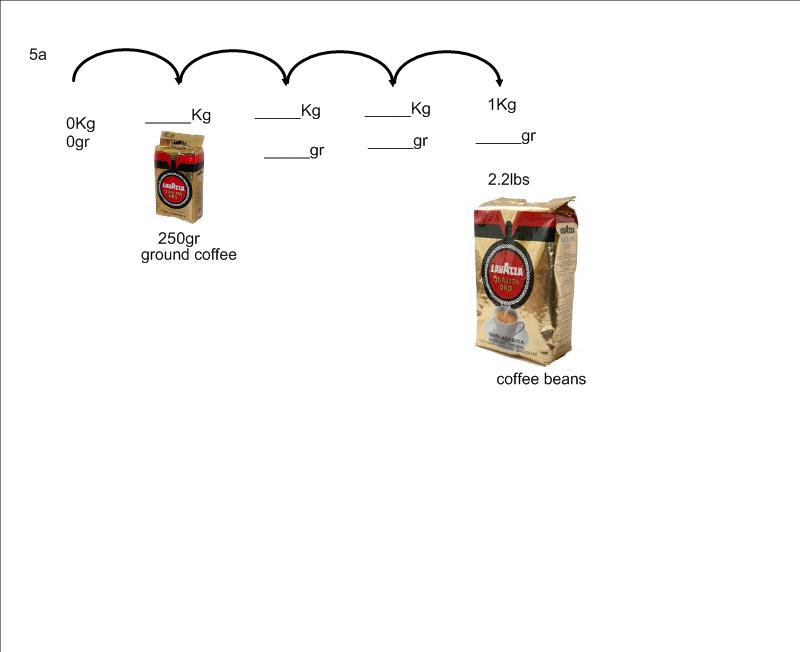
For homework, I suggest you build another 3D shape of your choice, draw a 3/4 view of it on isometric paper, and sketch its front/back/right side/left side/top/bottom views on grid paper. Next, select any household object and express its capacity/volume in ml, L, and oz. Finally, select any household object and express its mass/weight in gr, kg and oz.  Be prepared for a quiz on what we've done so far.  Below are today's corrections for drawing 3D shapes, volume & mass: